


Operational Excellence · Professional · MBE™
VSM
Mastering Value Stream Mapping

Operational Excellence
Professional level

46 Hours
17 Modules

Self-paced
Learn at your own pace

Certification
Earn an MBE™ Credential

VSM
Choose your enrolment option
- Learn at your own pace, anytime and anywhere
- Structured, practical content built around real-world application
- Digital resources, tools, and templates to support your learning
- Verifiable certification recognizing demonstrated proficiency
Start immediately, no batch required.
Talk to an Advisor Mastering Business Excellence
Certification terms and policies apply
About the VSM Certification
Gain valuable insights into value stream analysis, Gemba-based data collection, bottleneck identification, takt time, flow optimization, and continuous improvement planning. The course helps professionals develop the skills needed to drive process excellence and operational improvement.
What You Will Learn
- Understand Lean thinking and value stream concepts.
- Select and scope value streams effectively.
- Use standard Value Stream Mapping symbols.
- Conduct Gemba-based process observation.
- Create current-state value stream maps.
- Identify waste, delays, and bottlenecks.
- Apply takt time and flow principles.
- Design future-state value stream maps.
What you take away
Skills You'll Build


Value Stream Mapping
Lean Process Analysis
Process Visualization
Waste Identification
Core Topics
Who Is This Course For?
Operations professionals
Map value streams to expose waste and delays
Quality practitioners
Improve flow and quality with value stream maps
Supply chain personnel
Streamline supply chain flows end to end
Lean practitioners
Lead value stream mapping workshops
Process improvement teams
Redesign processes around customer value
Operations managers
Turn value stream insight into operational results
What's Included?
 Self-paced modules you can revisit anytime
- Digital study resources and templates
- Knowledge checks and practice assessments
- The fee includes course, examination and certification fees
Mastering Business Excellence
Certification terms and policies apply
Course Outline
- The Origins of Lean: From the Toyota Production System to Lean Thinking
- The Five Principles of Lean
- What Is a Value Stream? Material and Information Flow
- Value, Non-Value, and the Eight Wastes

Complete the professional assessment to earn the VSM credential
Choose How You Learn

Live, Instructor-Led
Not Offered for This Program
Showcase Your Operational Excellence Expertise
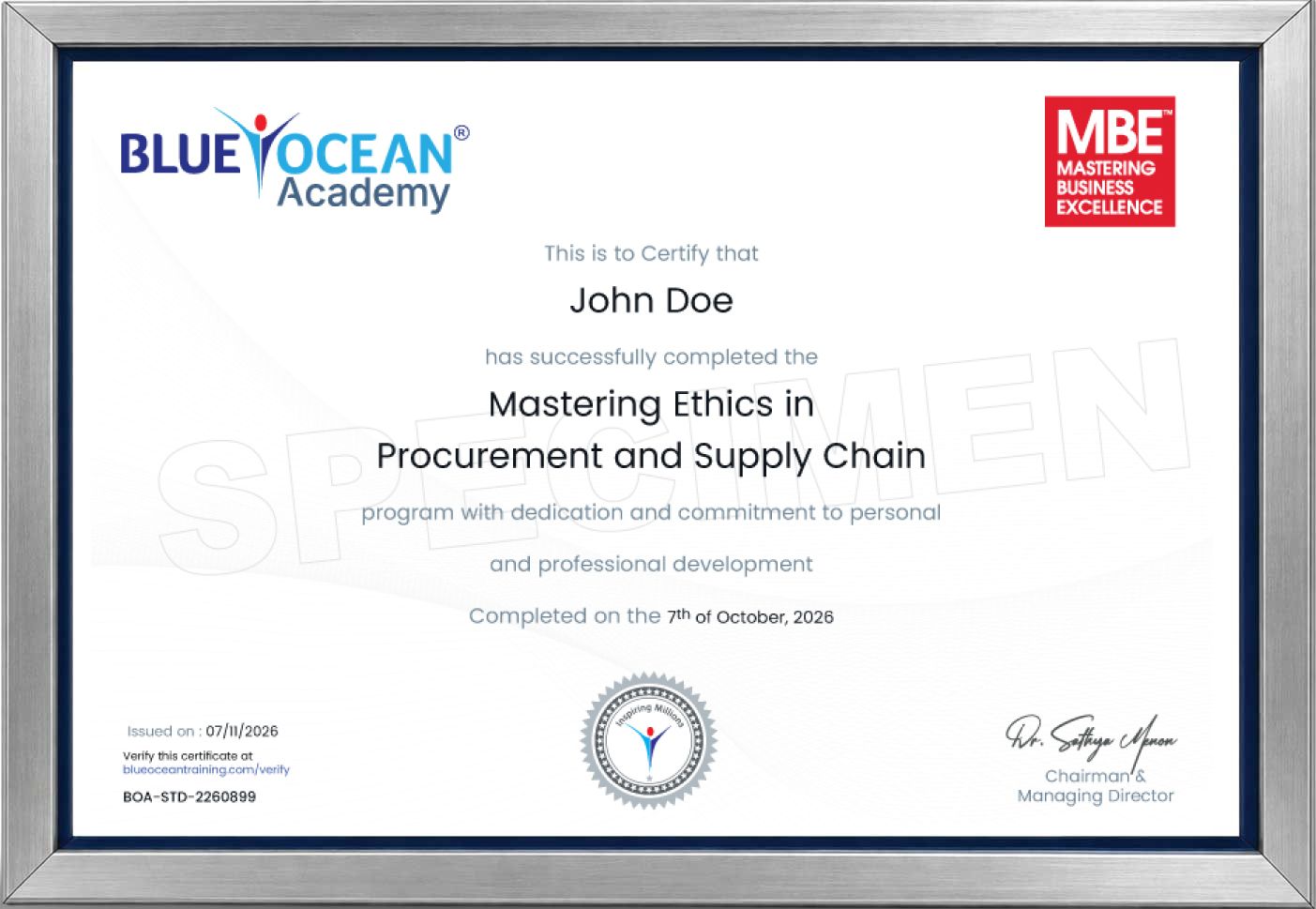
Every Blue Ocean credential is issued digitally, can be verified by employers, and carries the name of the certifying body on the certificate. Add it to your professional profile the day you pass.

Digital Certificate

Verifiable Credential

Professional Recognition

Credential Holder Profile


Find certification
Need Help Choosing Your Certification?
Explore Courses by Domain, Level and Certification Body

