
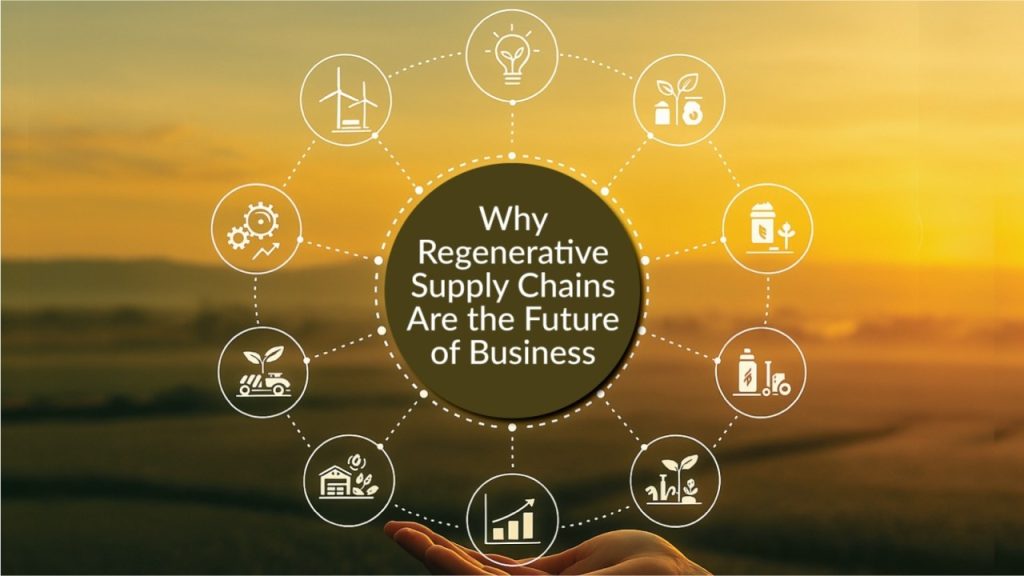
Why Regenerative Supply Chains Are the Future of Business?
For years, we’ve focused on building sustainable supply chains, systems designed to reduce harm, cut emissions, and limit waste. But in today’s world, that’s no longer enough.
The new frontier? Regenerative supply chains.
Instead of just doing less harm, regenerative supply chains aim to do better. They go beyond traditional sustainability by restoring ecosystems, strengthening communities, and creating long-term economic value for everyone involved.
So what exactly is a regenerative supply chain? It’s a model that actively restores nature, supports fair labor, and builds economic systems that are resilient, ethical, and future proof. From farm to shelf, it’s about reimagining the entire process with regeneration at its core.
Here are the five key principles driving this shift:
• Circularity: Design products and processes that reuse, recycle, and repurpose materials, keeping waste to a minimum and resources in continuous use.
• Ecosystem Restoration: Adopt practices that heal the environment — such as improving soil health, planting native species, and enhancing biodiversity.
• Social Equity: Ensure every worker in the supply chain is treated fairly, paid adequately, and included in decision-making processes.
• Economic Resilience: Build flexible, adaptable systems that can withstand disruptions while supporting livelihoods across the chain.
• Positive Environmental Impact: Move from minimizing damage to creating measurable positive change in ecosystems and communities.
Looking ahead, the future is regenerative.
Major global companies are already shifting gears. From food giants like Unilever to tech players rethinking electronics recycling, the momentum is growing. Consumers are prioritizing ethical brands. Investors are tracking ESG performance more closely than ever. And climate challenges are forcing businesses to rethink outdated systems.
Yes, the transition can be complex. It requires investment, innovation, and collaboration. But the benefits are clear. Regenerative supply chains offer a way to protect the planet, support people, and ensure long-term profitability.
It’s time for businesses to move from intention to action. Regeneration isn’t just a concept. It’s the future of how we create, consume, and care for our world.