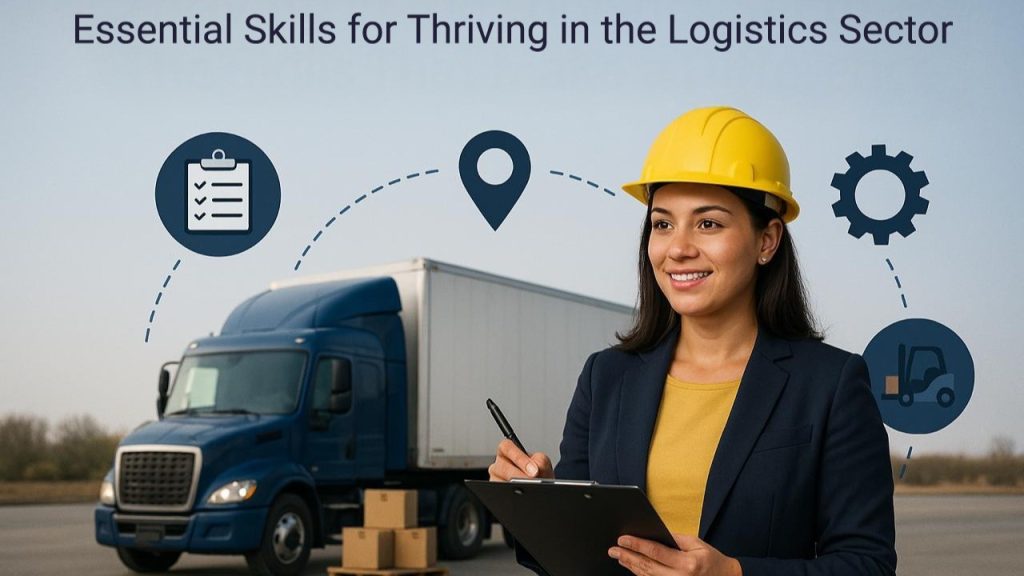
Essential Skills for Thriving in the Logistics Sector
The logistics industry is the unsung hero of modern commerce, that keeps the global supply chains moving, warehouses stocked, and deliveries on track. To thrive in this high-pressure, fast-paced environment, logistics professionals must bring a well-rounded skill set to the table. These competencies fall broadly into three categories: technical skills, people skills, and soft skills.
1. Technical Skills: The Foundation of Efficiency
At the core of logistics is data. The ability to analyze figures, forecast demand, and optimize processes is no longer a bonus; it’s expected. Tools like spreadsheets, freight management software, and warehouse systems are essential for mapping delivery timelines, reducing costs, and improving accuracy. A deep understanding of supply chain and inventory management, coupled with the know-how to handle equipment like forklifts or pallet jacks, gives professionals an operational edge. Project management is another critical pillar. Those who can plan, anticipate risk, and streamline supply flows are positioned for leadership roles.
2. People Skills: The Glue That Holds Operations Together Logistics may run on systems, but it succeeds on collaboration. The ability to work in cross-functional teams, coordinate with drivers, negotiate with suppliers, or reassure clients is vital. Strong interpersonal and communication skills help maintain clarity across a network of stakeholders, especially during unexpected disruptions. Customer service, too, plays a larger role than many realize. Timely, transparent communication with clients builds trust and can make the difference between a one-time transaction and a long-term relationship.
3. Soft Skills: Navigating the Unexpected If there’s one constant in logistics, it’s change. A container gets delayed, demand suddenly spikes, a route gets blocked; adaptability is key. Problem-solving and critical thinking help professionals pivot quickly, resolve issues, and keep operations running smoothly.
Finally, the ability to stay organized and forecast needs in advance helps teams avoid the fire-fighting approach and move toward strategic planning.
As the logistics landscape continues to evolve with new technologies, rising consumer expectations, and global uncertainties, professionals who develop a mix of these skills will not only stay relevant but lead the way forward.